 Skip to content

Master Poker Bluffs That Win Instantly
What game combines skill, psychology, and calculated risk into every single hand? Poker is a card game where players wager on the strength of their hidden hands, using a blend of probability and reading opponents to win chips. The core objective is to either hold the best five-card combination at showdown or force all rivals to fold through strategic betting. Mastering hand rankings, pot odds, and positional awareness are essential for consistent success at the table.
Understanding the Core Mechanics of the Game
Understanding the core mechanics of poker begins with hand rankings, where the relative strength of five-card combinations determines the winner. Position at the table dictates betting order, granting later players more information before acting. The betting rounds—pre-flop, flop, turn, and river—structure the flow, each allowing checks, bets, calls, raises, or folds. Pot odds and equity calculations help you decide whether calling a bet is mathematically sound based on your chance of improving. Bluffing works only when your table image and the board texture make your story believable. Mastering these mechanics means internalizing the rhythm of betting, the value of aggression, and the discipline to fold when the math fails you. Mastering poker’s core mechanics transforms random play into strategic decision-making, while positional awareness remains the single most influential factor in every hand you play.
Hand Rankings: What Beats What at the Table
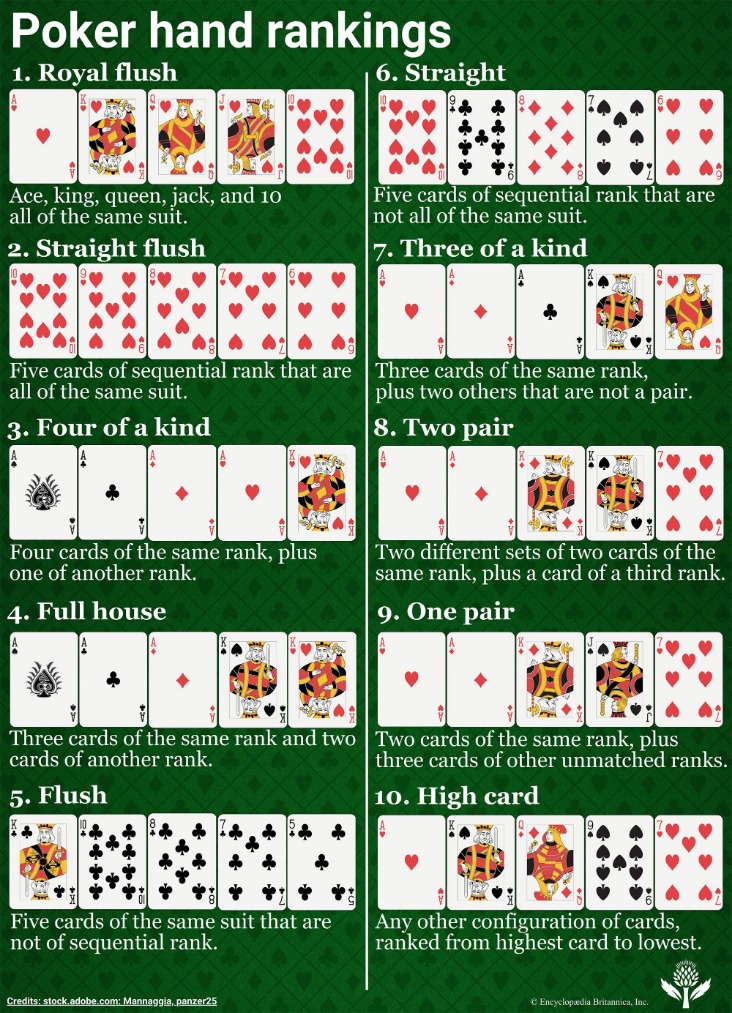
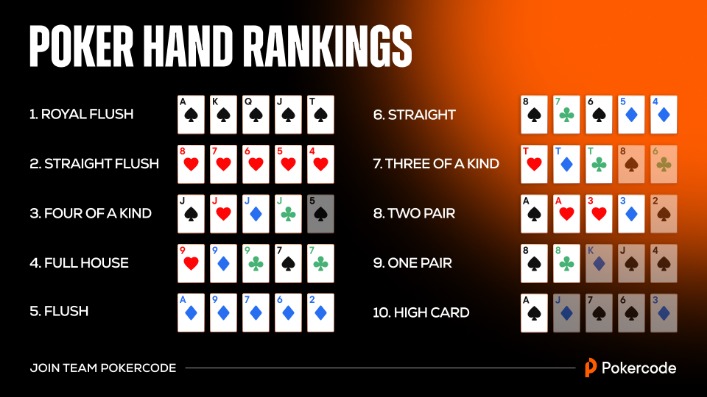
At the table, poker hand rankings dictate every showdown, from the lowest high card to the royal flush. The hierarchy is absolute: a straight flush beats four of a kind, which beats a full house, which beats a flush, which beats a straight, which beats three of a kind, which beats two pair, which beats one pair, which beats high card. When comparing identical hand types, the highest card in the combination wins—so an ace-high flush tops a king-high flush. If the primary cards tie, compare the next highest kicker. In Texas Hold’em, you always use the best five cards from your two hole cards and the five community cards. Memorize the order cold; hesitation at showdown costs you chips when you misread a board.
Q: What beats a full house? Only four of a kind or a straight flush beats a full house—no other hand outranks it.
Betting Rounds and When to Raise, Call, or Fold
Betting rounds structure every hand, dictating when you can act and how much information you gain. Pre-flop, you raise with premium hands to narrow the field, call with speculative holdings when pot odds justify it, and fold weak off-suit cards. Post-flop, the decision hinges on board texture and opponent tendencies: raise for value with strong made hands, call when drawing to a nutted hand with correct implied odds, and fold when facing aggression against your marginal pair. The turn and river require tighter discipline—position-based aggression becomes critical, as late-acting raises force opponents to react. A clear sequence applies: (1) assess your hand strength relative to the board; (2) calculate pot odds and implied odds; (3) evaluate your opponent’s likely range; (4) choose raise, call, or fold based on whether your expected value is positive or negative.

Blind Structures and Positional Advantage Explained

Blind structures dictate the forced bets that initiate action, escalating from small blind to big blind to create a pot worth contesting. Positional advantage, meanwhile, refers to acting later in a betting round, which lets you observe opponents’ decisions before committing chips. A tight blind structure, such as a slow-rising ante, rewards patience, while a fast structure pressures stacks, making post-flop positional leverage critical for stealing blinds and controlling pot size. Early positions must play tighter because they act first on every street, whereas late positions can exploit wider ranges. Understanding how blind levels intersect with your seat at the table is fundamental to profitable decision-making.
Blind structures set the stakes and pace, while positional advantage grants information—together they define when to fight for pots and when to fold.
Mastering Core Strategies for Consistent Wins
Mastering core strategies for consistent wins in poker isn’t about chasing lucky cards—it’s about tightening your preflop ranges and playing position like it’s your superpower. You need to fold trash hands from early seats and aggressively steal blinds on the button, which immediately shifts the odds in your favor. Bankroll management is the quiet backbone of consistency; if you don’t protect your stack, even the best reads won’t save you. Focus on pot odds and expected value for every call, not the drama of the hand. Never bluff a calling station—that’s a leak that bleeds wins dry. Stick to tight-aggressive play, exploit weak limpers, and review your own sessions to spot patterns. Wins come from repetition, not heroics.
Starting Hand Selection: Which Cards Are Worth Playing
In poker, starting hand selection is the filter between profit and leakage. Premium pairs (AA, KK, QQ) and ace-king suited warrant aggressive preflop raises from any position, while speculative hands like中小 suited connectors (76s, 54s) only become profitable when entering cheaply from late position against multiple opponents. Fold dominated aces (AJ offsuit) in early seats—they trap you against stronger kickers. **Mastering hand ranges by position** dictates that a 15% VPIP from the cutoff is solid, but under 8% under the gun is ideal. Avoid middle pairs (99-77) when facing a three-bet without set-mining odds. Position-based hand ranking is your only true compass; play tighter up front, looser on the button.
Q: Which starting hands should you always fold, regardless of position?
A: Insta-fold unsuited rags (72o, 83o) and low gap connectors (J3o)—they win fewer pots than their rake cost and force you into weak top-pair scenarios with zero redraws.
Reading Opponents Through Betting Patterns and Tells
Reading opponents through betting patterns and tells transforms guesswork into a calculated edge. A sudden overbet on the river often signals polarised strength or a desperate bluff, while a quick, uniform call typically indicates a marginal made hand. Physical tells—such as trembling hands or a forced exhale—are less reliable online, where timing and bet sizing become your primary data. To master core poker strategy through opponent profiling, track whether a player raises continuations frequently or checks back draws. Reconcile these patterns with showdowns to confirm their tendencies. Key highlights:
- Bet size irregularities reveal hand strength or fear.
- Timing tells expose hesitation or rehearsed aggression.
- Consistency across streets validates a player’s betting narrative.
Pot Odds and Expected Value: Making Profitable Decisions
Pot odds are simply the ratio between the current pot size and the cost of your call, and they tell you if chasing a draw is mathematically worth it. Compare that ratio to your hand’s chance of improving – if your equity is higher than the pot odds, you’re looking at a positive expected value decision. For example, facing a $10 bet into a $50 pot gives you 5:1 odds, so you only need about a 17% chance to win for the call to profit long-term. Expected value then ties every street together, weighing future bets you might win or lose. Mastering this math turns guesses into consistent, profitable plays.
- Always calculate pot odds before calling any bet on the turn or river.
- Convert your outs into a percentage, then compare directly to the pot odds ratio.
- Remember that implied odds can justify a call when deep stacks remain, but only with clear nut draws.
Choosing the Right Game Format for Your Skill Level
Choosing the right poker format is about matching the game’s demands to your current toolkit, not just chasing the biggest pots. If you’re just starting out, cash games with low blinds let you learn at your own pace, since you can top up and leave whenever you want without tournament pressure. Once you’ve got a feel for post-flop play, fast-fold formats like Zoom or Rush are perfect for racking up volume and spotting your own leaks quickly, though they demand tighter preflop ranges. Tournament play, especially with deep stacks, rewards patience and ICM awareness—skills that only come from experience. Don’t mistake a winning micro-stakes record for readiness to jump into high-variance bounty tournaments. Ultimately, pick the format that punishes your worst habits the least while still pushing you to improve.
Cash Games vs. Tournaments: Key Differences and Bankroll Fit
In cash games, blinds remain static, so your bankroll faces steady, manageable variance—a rule of thumb is holding 20–30 buy-ins to weather swings without tilt. Tournaments, however, impose escalating blinds and payout cliffs, creating extreme variance where even skilled players bust frequently; a 100-entry-fee bankroll is a bare minimum for deep runs. Bankroll fit for poker formats hinges real mahjong on your tolerance for long scoreless stretches versus hourly consistency. For sequence: first, assess your risk capacity; second, match cash-game stakes to 3–5% of your roll per session; third, reserve tournament entries only for surplus funds beyond liveable cash reserves. Cash rewards patience, tournaments reward adaptability, and switching without recalibrating ruins both.
Short-Handed vs. Full-Ring Tables: Finding Your Comfort Zone
At full-ring tables (9–10 players), your starting hand requirements tighten dramatically, as post-flop play is multiway and positional edges are magnified. You can profitably fold marginal hands preflop and rely on implied odds. Short-handed (6-max or fewer) forces you to defend blinds wider, open more aggressively from the button, and contest pots with weaker top pairs. Your comfort zone depends on your tolerance for variance and hand-reading frequency. If you thrive on constant decision-making and bluffs, short-handed suits you; if you prefer patient, value-heavy play, full-ring aligns with your risk profile. Success requires honest self-assessment of your post-flop agility, not just win rate. Choosing the right table size hinges on your ability to adapt your preflop ranges to the number of opponents.
Full-ring rewards patience and premium hands; short-handed rewards aggression and adaptability—pick the format that matches your psychological threshold for frequent, marginal decisions.
Fixed-Limit, No-Limit, and Pot-Limit: Which Stakes Suit You
Fixed-limit reduces variance, making it ideal for disciplined players who thrive on pot odds and value betting, as bet sizes are locked. No-limit amplifies skill edges through stack-depth pressure, suiting aggressive players who can exploit positional leaks, yet demands a robust bankroll for its wild swings. Pot-limit, common in Omaha, balances both, capping bets while allowing geometric growth, perfect for those who excel at manipulating pot control. Your bankroll volatility tolerance and post-flop creativity determine the optimal stakes structure. Start with fixed-limit to master hand reading, then transition to pot-limit for controlled aggression before attempting no-limit’s psychological warfare. Overestimating your emotional resilience is the fastest way to leak chips in no-limit’s all-in moments.
Q: How do I choose between fixed-limit, no-limit, and pot-limit for my skill level?
A: If you’re a beginner, fixed-limit protects you from catastrophic losses while teaching pot odds. Intermediate players benefit from pot-limit’s strategic depth without full exposure. Advanced players who thrive on pressure and deep-stack play should use no-limit only after proving consistent win rates in capped formats—your edge must outpace the variance.
Advanced Tactics to Elevate Your Edge
To truly elevate your edge, stop playing your hand and start playing their *range*—attack boards that miss their preflop calling range with overbets, forcing folds from medium pairs. Master the check-raise on turn cards that complete obvious draws, because that’s where most recreational players overvalue top pair. Polarize your river bets into pure nuts or air, never thin value, since balanced nut/air ranges are nearly impossible to exploit. Exploit timing tells intentionally: act quickly with your strongest draws and tank with medium strength, then reverse it against observant regs. Most players over-adjust to aggression, so your real edge comes from choosing which opponents to bluff versus which to value-bet thinly. Finally, track your own tilt triggers and switch to a tighter passive style for twenty minutes—your edge only exists when your decisions are cold.
Bluffing and Semi-Bluffing: Timing and Frequency That Work
Bluffing and semi-bluffing live or die by timing, not just hand strength. The most effective frequency shifts when your opponent’s range weakens—typically on turn cards that complete obvious draws or scare cards that kill their aggression. A timed, balanced bluff frequency of roughly one bluff per three value bets works on most cash-game regulars, but only if you fire after a specific trigger, such as their delayed check on a paired board. Semi-bluffs work best with 8–15 outs, because the equity cushion makes the bet profitable even when called. Follow this sequence: first, identify a polarized spot; second, choose a card that changes board texture; third, execute with a consistent bet size—not a tell-heavy larger or smaller amount. Over-bluffing invites calls; under-bluffing invites folds. Adjust every time you see them float or snap.
Exploiting Tight and Loose Players at Your Table
Against a **tight player**, you must aggressively attack their folded blinds and steal their limps with wider ranges, but always respect their check-raises on the flop—it signals genuine strength. Conversely, the loose player’s wide opening range hands you their stack: three-bet them relentlessly with value hands, then barrel turns when they call with weak draws. The real edge emerges from interchanging these reads—tighten up against the loose player’s rare aggression, but widen your bluffing frequency versus the tight player’s predictable folds. Exploit their imbalances by over-folding to tight players’ raises and calling down lighter against loose players’ bluffs.
Adjusting Your Playstyle During Late-Game Pressure
When the bubble bursts and the money jumps loom, tightening your opening ranges is only half the battle. During late-game pressure, your goal shifts from winning pots to surviving with a playable stack, so begin by **exploiting fold equity against shorter stacks** who are terrified of elimination. Attack blinds from the cutoff and button with wider raises, but slow down against covering stacks who can bust you. Conversely, if you’re the short stack, shove first-in rather than calling off—your fold equity is your lifeline. Watch for opponents who tighten up; steal their blinds relentlessly. Adjust your post-flop bet sizing to protect your tournament life, not just the pot. Finally, switch gears between aggressive and passive frequencies based on who’s more desperate than you.
Q: What’s the single most important adjustment when blinds are crushing you?
A: Stop flat-calling. Every call invites multiway pots and tough decisions; instead, raise or fold to retain control and keep your decisions simple under pressure.
Practical Bankroll Management and Mental Game Tips
Effective bankroll management in poker begins with strict buy-in caps: keep at least 100 buy-ins for cash games and 100 tournament entries to withstand variance. Drop a stake level immediately if you lose ten buy-ins, and never move up until you have a proven win rate over 50,000 hands. For the mental game, set a daily loss limit—stopping after two buy-ins prevents tilt from compounding into a ruinous session. Recognize that tilt is not an emotion to suppress but a signal to log off and review your decision tree objectively. Use a session timer to force breaks every 90 minutes, and track your emotional state alongside results to identify leak-triggering patterns. Discipline is your true edge, as skill gaps shrink at higher stakes. Finally, separate your poker funds from living expenses—this removes financial fear, which is the root of most poor decisions. Your bankroll is a scoreboard, not a wallet; protect it with the same rigor you use to study ranges.
Setting Loss Limits and Sizing Your Bets to Avoid Going Broke
Setting **poker loss limits** before you sit down is non-negotiable: decide a fixed amount you can afford to lose, and stop immediately once it’s gone. A common rule is capping losses at 5–10% of your total bankroll per session, which ensures a bad streak won’t wipe out your funds. Sizing bets also protects you—never buy into a cash game with more than 5% of your bankroll, and for tournaments, keep buy-ins under 2%. To avoid going broke, follow this sequence:
- Set a daily loss cap in cash, not chips.
- Divide your bankroll into 20–30 buy-ins for your chosen stake.
- Drop down a stake if you lose 10% of your bankroll in one week.
- Reassess your limits only after a winning month, never mid-session.
This discipline turns variance into a manageable cost, not a financial disaster.
Handling Bad Beats and Tilt: Keeping Emotions in Check
Bad beats are a statistical certainty, so the analytical response is to pre-accept their inevitability, which neutralizes their emotional spike. When tilt begins, the logical first step is a physical reset—stand up, breathe, and name the emotion you are feeling, which forces your rational brain back online. Your primary safeguard is the stop-loss limit; a predetermined cap on buy-ins lost per session functions as an external brake, preventing impulsive re-buys driven by frustration. Since tilted decisions are mathematically negative EV, you must recognize the moment your play shifts from strategy to revenge. Ultimately, keeping emotions in check is not about suppressing feelings but about creating an automatic, rule-based response that overrides them.
Tracking Your Sessions: Simple Metrics to Measure Improvement
Tracking your sessions begins with logging the raw data—hands played, time elapsed, and net profit—but the real signal emerges from a few targeted ratios. Focus on your big-blind win rate per hundred hands, as it smooths variance better than hourly figures. Record your biggest pot won and lost to spot leak patterns. Also track your fold-to-three-bet frequency; a drift upward often signals tilt-induced passivity. Your session length itself is a metric, since decision quality degrades after the 90-minute mark even if you feel sharp. Finally, tally how many times you played a marginal hand from early position—reducing that number across weeks shows genuine discipline, not luck.